July 31, 2026, Yerevan
Ahead of the the newly elected National Assembly of the 9th convocation beginning its work, Deputy Speaker Ruben Rubinyan, temporarily performing the duties of the NA Speaker, signed a decision “On Approving the Security Rules in Effect on the Premises and in the Building of the National Assembly,” which also relates to the activities of media representatives in the parliament. The document has already sparked concern within journalistic circles due to its unclear formulations and unacceptable restrictions.
In essence, the new rules continue and further tighten the restrictions that were established by the relevant decision adopted on February 12, 2019 and subsequently expanded through amendments and supplements to Appendix 1 of the document exactly 5 years ago, on these same days of 2021. It should be recalled that those provisions led to restrictions on the movement and activities of journalists in the National Assembly that were unprecedented in the entire history of the Armenian parliament. What is, at the very least, puzzling is that neither then nor now have these decisions been discussed with media and journalistic NGOs.
Considering it pointless at this stage to compare the old and new rules and identify their differences, we will address only some provisions of the latest decision that concern media. For example, paragraph 1.6 of the document is highly problematic: alongside territorial restrictions on the exercise of journalists’ professional activities, it stipulates that “accredited journalists may attend a committee session with the permission of the committee chair.” Furthermore, these journalists must be included on a list in advance, which must be submitted to the NA Secretary-General at least 2 hours before the session. This opens up a wide field for arbitrary decisions by committee chairs. It is also unclear how one can justify paragraph 6.16, which reads that “during open sittings of the NA, the right to be present in the lodges of the sitting hall shall be granted to persons included on the list provided by the NA Secretary-General.” Does this mean that already accredited journalists must be placed on an additional list to enter and work in the press lodge? Why and how frequently?
It is also unacceptable that, within the National Assembly, it is prohibited to film or photograph State Protection Service officers while they are performing their duties. This regulation has also been applied previously and has been criticized by the Information Disputes Council: the provision is broadly and vaguely formulated and fails to balance the public interest in receiving information with security officers’ performance of their official duties, and the right to respect for private life. The expert group therefore concluded that the provision was unlawful.
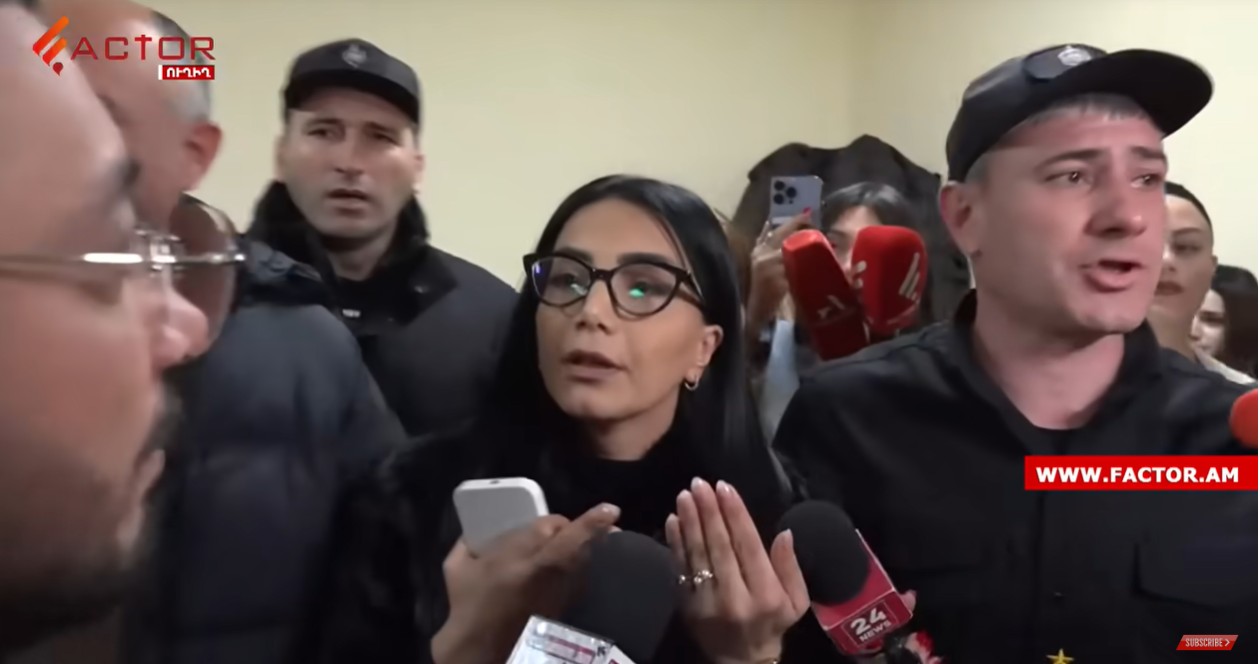
If we recall that there were numerous occasions in the National Assembly of the 8th convocation when heated exchanges in the sitting hall escalated into fights between deputies, with security officers rushing into the press lodge and demanding that journalists stop filming and leave the premises, it becomes quite clear why the aforementioned ban was introduced. Nevertheless, such scenes are nothing new, and the public has the right to know about each deputy’s working style and conduct.
In this regard, we, the undersigned journalistic organizations, deem it necessary to emphasize that the above-mentioned and a number of other problematic provisions of the decision run counter to the guarantees concerning freedom of expression and the activities of media, enshrined in the RA Constitution, the Law “On Mass Communication,” as well as international documents signed by Armenia. Hence, we demand that the leadership to be elected for the National Assembly of the 9th convocation:
- suspend the application of the provisions of the decision “On Approving the Security Rules in Effect on the Premises and in the Building of the National Assembly” relating to media representatives;
- initiate open discussions with media, journalistic NGOs, and other stakeholders aimed at finding mutually acceptable solutions to the problems contained in these provisions.
COMMITTEE TO PROTECT FREEDOM OF EXPRESSION
YEREVAN PRESS CLUB
MEDIA INITIATIVES CENTER
MEDIA DIVERSITY INSTITUTE-ARMENIA
JOURNALISTS’ CLUB “ASPAREZ”
PUBLIC JOURNALISM CLUB
“JOURNALISTS FOR THE FUTURE” NGO
“JOURNALISTS FOR HUMAN RIGHTS” NGO