In 2025, representatives of the authorities, including high-ranking officials, were responsible for most of the various types of pressure exerted on media and journalists and half of the lawsuits filed. The total number of violations of the rights of media representatives surpassed that of the previous year, reaching 224 compared to 208. The violations were distributed as follows: 15 cases of physical violence, 108 cases of other types of pressure, and 101 violations of the right to receive and disseminate information.
Similar to previous years, an increase in the number of the above-mentioned cases was observed especially during periods of intensified socio-political situation in the country. Under these conditions, the polarization of the media field became more pronounced, as did the tendency of most media to serve the interests of different political camps, along with the intolerance and aggression displayed by both the authorities and opposition forces toward one another and toward journalists outside their respective circles. In the tense environment that has emerged, carrying out journalistic work in line with professional principles has become extremely challenging. After all, these trends have a negative impact on the level of trust in the media.
Throughout the year, reports from various international organizations consistently pointed out the polarization of the Armenian media sector as a regressive phenomenon, also linking it to the broad dissemination of disinformation, fake news, manipulative publications, insults and defamation. In particular, the confrontations between the authorities and the church leadership, the authorities and the opposition, as well as a range of other problematic processes and major events of national significance were covered in the same vein. The spread of hatred and intolerance across media and social networks has become a serious obstacle to conducting civilized debates and discussions on important public matters, a situation that is especially concerning in the context of the upcoming parliamentary elections in 2026.
Perhaps this tense situation conditioned the sharp rise in the number of new lawsuits filed against journalists and media in 2025, comparable to the volume of similar cases in the post-revolution year of 2019 and the post-war year of 2021. In the year under review, 61 new lawsuits were filed on the grounds of insult and/or defamation under Article 1087.1 of the RA Civil Code, with an additional 2 lawsuits filed for copyright protection. In 2024, the number of such lawsuits stood at 43. Of the 63 lawsuits mentioned above, 31 were filed by state bodies or officials. Among those who chose to resolve information disputes through litigation were National Assembly Speaker Alen Simonyan, RA Prime Minister Nikol Pashinyan, his Chief of Staff Arayik Harutyunyan, Foreign Minister Ararat Mirzoyan, ruling Civil Contract faction deputies Hayk Sargsyan, Rustam Bakoyan, Arsen Torosyan, formerly a deputy and now Minister of Labor and Social Affairs and others.
Of the lawsuits against media and journalists that had been accepted for proceedings in earlier years, 15 were upheld in 2025, with the corresponding judicial acts entering into force. These decisions obligated the defendants to publish refutations, pay monetary compensation and/or court costs. Overall, these rulings resulted in the collection of about 3.3 million drams from journalists and media. A total of 21 previously filed lawsuits against media were conclusively rejected in 2025, while 6 were terminated and 2 were returned.
In 2025, 5 lawsuits filed by media and journalists against officials and state bodies in earlier years were conclusively rejected, while 1 was upheld. In addition, 9 such lawsuits remain pending, with three of them accepted for proceedings in the year under review.
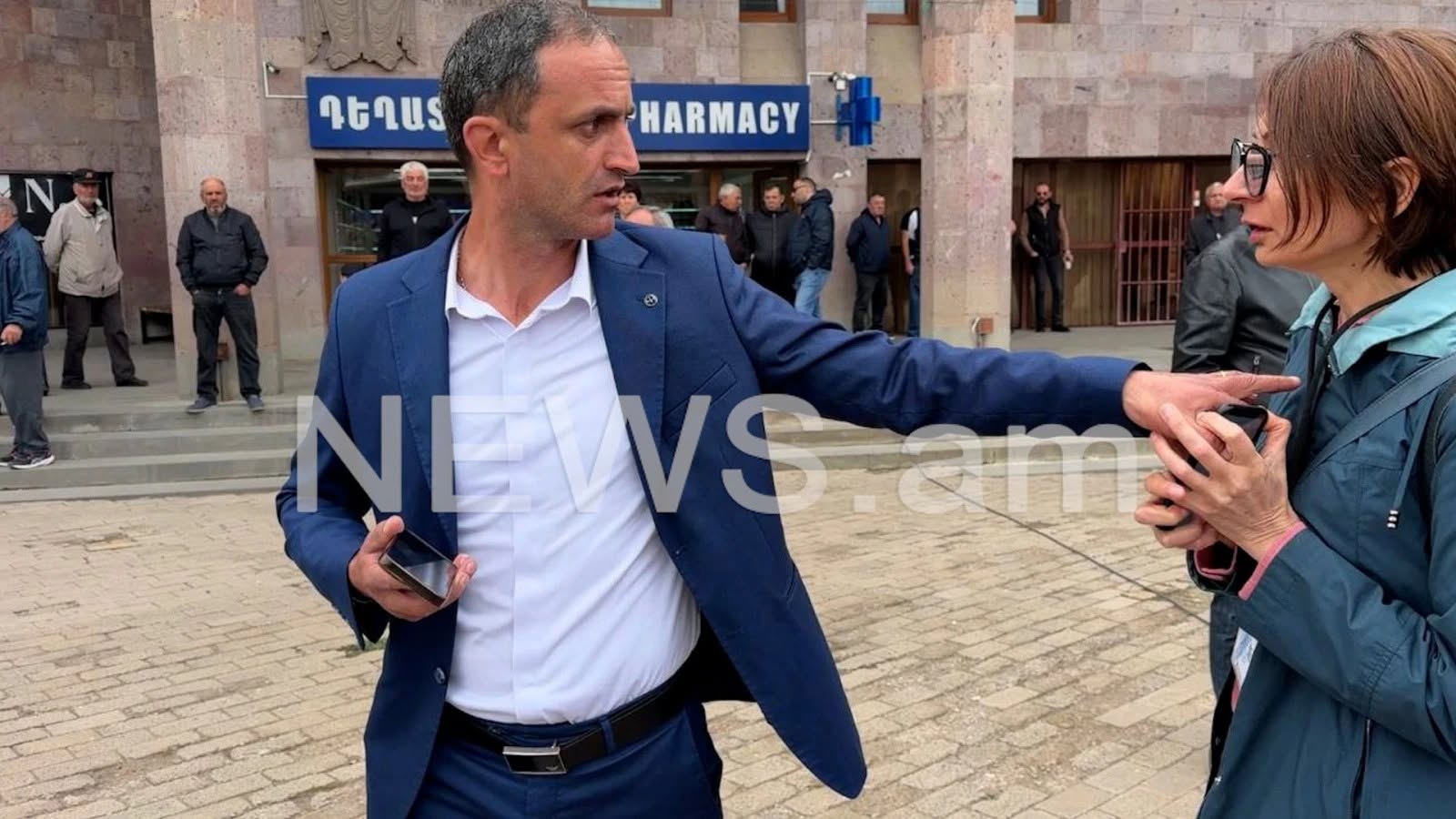
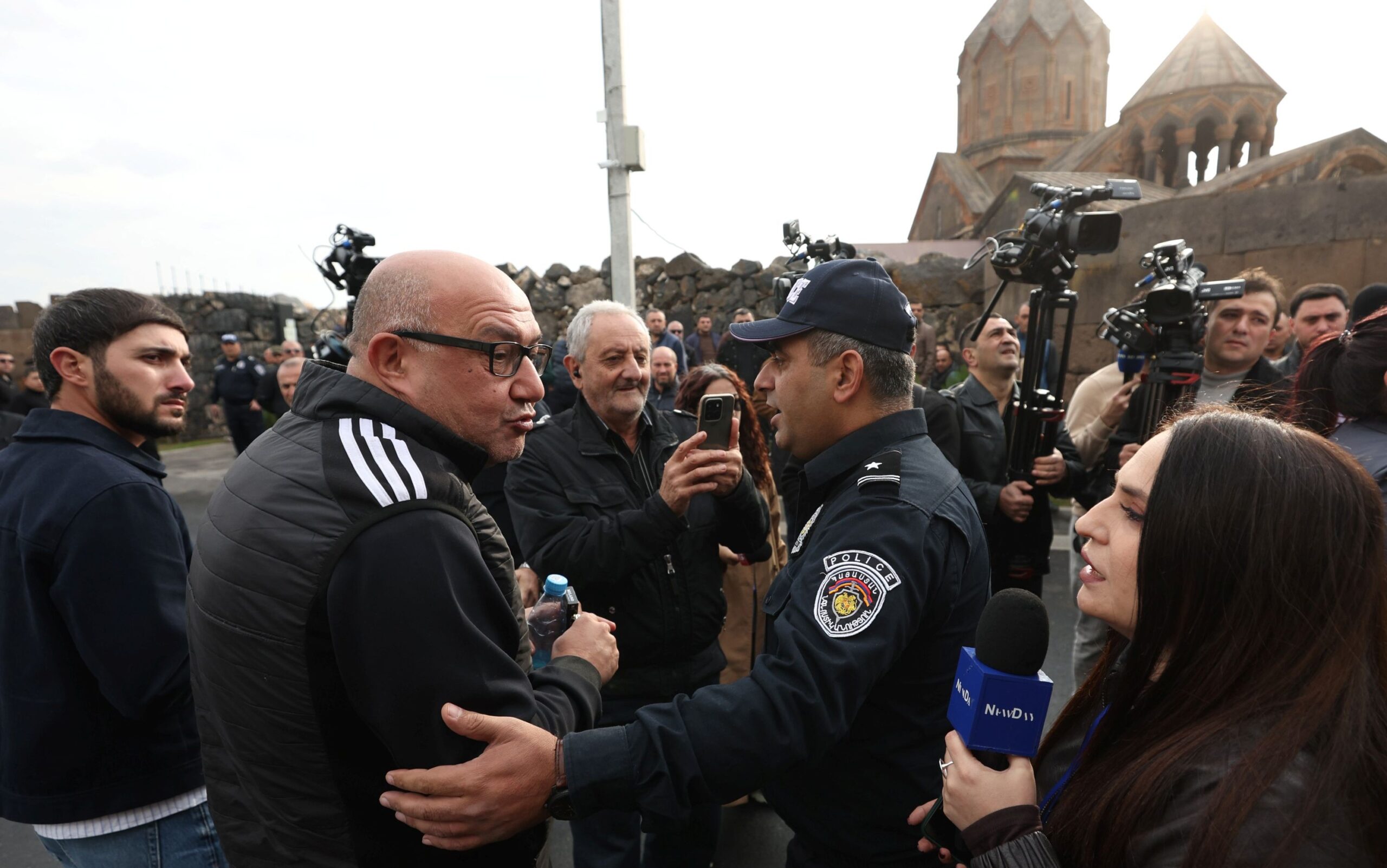
Throughout the year, 45 cases were also recorded, in which journalists faced indecent treatment, threats, insults, and obstruction of legitimate professional activities, with 33 of them committed by state bodies or officials. In particular, when interacting with media representatives, disrespectful and indecent conduct was displayed by National Assembly Speaker Alen Simonyan, deputies Andranik Kocharyan, Vilen Gabrielyan, Arsen Torosyan, Yerevan Mayor Tigran Avinyan, Gyumri Mayor Vardan Ghukasyan and others.
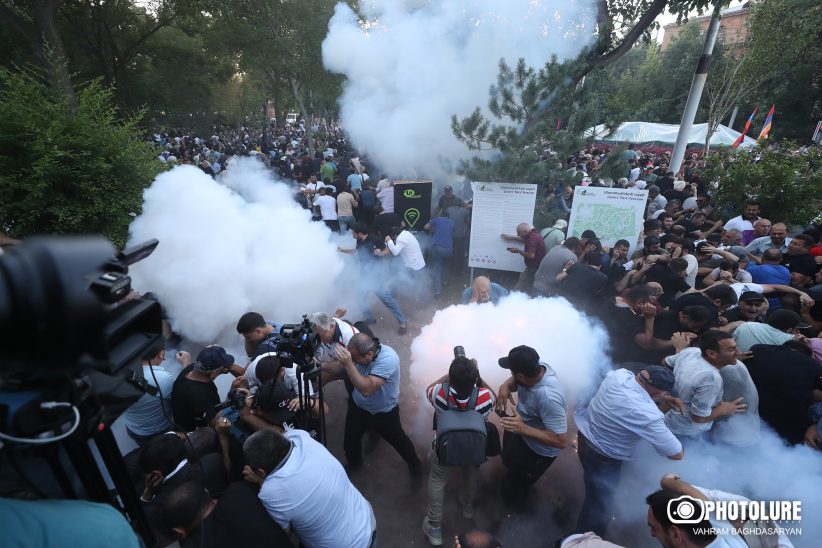
A total of 15 cases of physical violence against journalists and cameramen were recorded. Of these, 7 were committed by law enforcement officers, another 7 by government supporters, and in 1 case, the perpetrator remains unidentified.
Despite a decrease in the number of violations of the right to receive and disseminate information in the reporting year compared to 2024, the present situation remains far from favorable. A total of 101 such violations were recorded. Widespread issues continue to include unnecessary delays by state bodies in responding to journalists’ inquiries, unfounded refusals to provide the requested information, and formal, incomplete responses that did not correspond to the essence of the questions asked.
All violations of the rights of media representatives are presented in the relevant sections of the report. Regarding the most extraordinary cases and urgent issues in the field, the CPFE and its partner journalistic organizations issued joint statements, while the Information Disputes Council and the Media Ethics Observatory released expert opinions.
During the year under review, the legislation regulating the media field underwent fragmented changes. However, deeper and more coordinated reform and modernization are needed, along with efforts to bring it into conformity with international norms.
Photo credits: PHOTOLURE